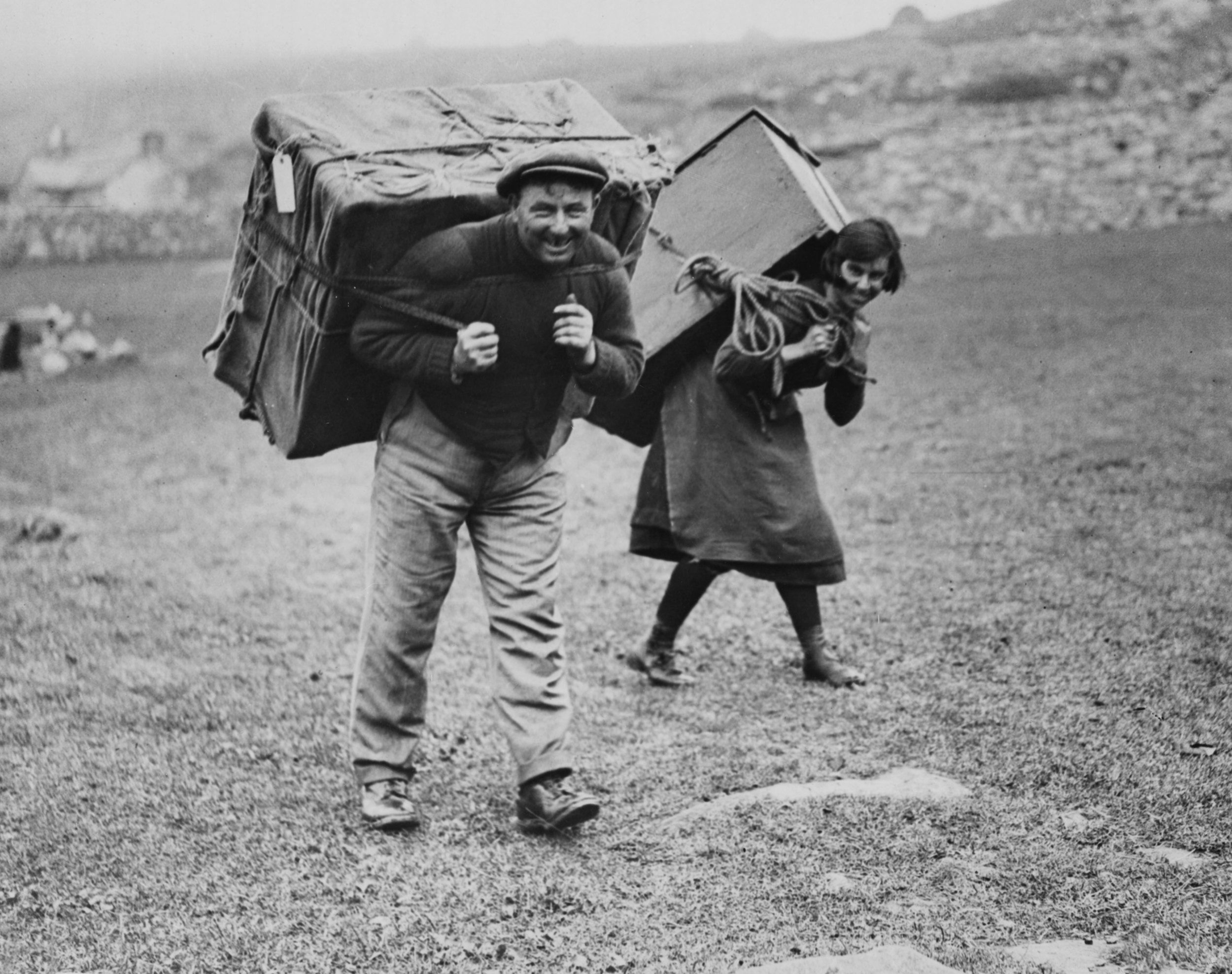
Evacuation of St Kilda
The final days on St Kilda.
Thig crioch air an t-saoghal ach mairidh gaol is ceòl
The world may come to an end but love and music will last forever
By 1930, life on St Kilda had become increasingly fragile. Only 36 people remained on the island - far too few to sustain the community or the traditional way of life. With many cottages sitting empty and several households made up of widows or older residents, everyday survival became harder with each passing year.
Harsh winters often cut off deliveries of food, mail and supplies. Traditional work such as sheep farming, tweed weaving, fishing and collecting seabird products became difficult to maintain, particularly as more young people left to find opportunities on the mainland. Concerns about health and access to medical care grew too, especially following the tragic deaths of two young women in 1930.
After the winter of 1929–30 the remaining islanders felt they could no longer manage another season alone. In May, twenty residents signed a petition asking the government to help resettle them on the mainland, with the support of the island nurse Williamina Barclay and the missionary schoolteacher Dugald Munro. They expressed a wish not necessarily to stay together, but simply to find a place where they had a better chance of work, support and stability.
The government responded quickly. On 29 August 1930, the islanders and most of their sheep left St Kilda aboard HMS Harebell. Families were resettled in several locations, including Lochaline, Strome Ferry, Culcabock and Culross, with work arranged to help them begin their new lives.
It marked the end of a remarkable chapter in Scotland’s island history - and the beginning of a new one for the St Kildans who left.
The Last Days | Na làithean mu dheireadh
Anns na bliadhnaichean ro1930, bha beatha muinntir Hiort air fàs nas cugallachd. Cha robh ach 36 neach air fhàgail air an Eilean agus a mhòr-chuid dhuibh nan seann aois.
Cha robh ach 36 neach air fhàgail air an Eilean, àireamh sluaigh ro ìosal airson coimhearsnachd a chumail suas. Le mòran de na dachaighean na seasamh falamh agus feadhainn dhuibh le direach aonan no dithis, banntraichean agus seann dhaoine, dh’fhàs beatha air Hiort nas doirbh mar a chaidh na bliadhnaichean seachad.
Bhiodh geamhraidhean cruaidh gu tric a’ gearradh dheth lìbhrigeadh bìdh, puist agus solar. Dh’fhàs obair thraidiseanta leithid croitearachd, a’ fighe clòidean, ag iasgach agus a’ cruinneachadh thoraidhean eòin-mhara duilich a chumail suas, gu sònraichte mar a dh’fhalbh barrachd dhaoine òga gus cothroman airson bith-beò fhaighinn air tìr-mòr.
Dh’fhàs draghan mu shlàinte agus ruigsinneach air cùram meidigeach cuideachd, gu h-àraidh an dèidh bàs dà bhoireannach òga aig àm breith leanabh, ann an 1930.
Às deidh geamhradh 1929–30, dh’aontaich a’ mhòr-chuid nach robh e comasach dhaibh cumail a’dol leotha fhèin. Anns a’ Chèitean chuir fichead dhiubh an ainmean ri athchuinge ag iarraidh air an riaghaltas cuideachadh le bhith gan ath-shuidheachadh air tìr-mòr, le taic bhon a bhanaltram Williamina Barclay agus an tidsear-sgoile, am miseanaraidh Dùghall Munro.
Chuir iad an cèill miann nach fheumadh iad a bhith a’fuireach comhla ach dìreach àite a lorg dhaibh far am biodh cothrom nas fheàrr aca air obair, taic agus seasmhachd.
Fhreagair an riaghaltas gu sgiobalta. Air 29 Lùnastal 1930, Là na h-Uabairte, dh’fhàg muinntir an eilein leis a’ mhòr-chuid de na beathaichean aca an eilean air bòrd HMS Harebell.
Chaidh teaghlaichean ath-shuidheachadh ann an grunn àiteachan, nam measg Loch Àlainn, Port an t-Sròim, Cùl Càbaig agus Cùl Rois, le obair air a cur air dòigh gus cuideachadh airson tòiseachadh air am beatha ùr.
Chomharraich an uabairt deireadh caibideil iongantach ann an eachdraidh eileanan na h-Alba - agus toiseach de fear ùr dha na Hiortaich a dh’fhalbh.