Voices and Sounds of St Kilda

Discover the archipelago through its voices, songs and sounds.

Sona gach ni a’ ghaoth na tàmh

Everything is peaceful when the wind is at rest

St Kilda’s story is carried not only in history books, but in the voices, sounds and memories passed down through generations. This collection brings together music, diaries, broadcast moments and lived experience - fragments that let us step closer to the people who once called Hiort home.

St Kilda Diaries

This Love Scotland podcast takes us back to life on remote St Kilda in the early 1900s. Using the handwritten diaries of Alice MacLachlan, a schoolteacher who lived on the islands from August 1906 to May 1909, we get a really personal glimpse into the challenges and extraordinary experiences of island life.

You’ll hear extracts from Alice’s diaries brought to life, accompanied by original music inspired by the islands.

The Hebridean Mermaid Visits St Kilda

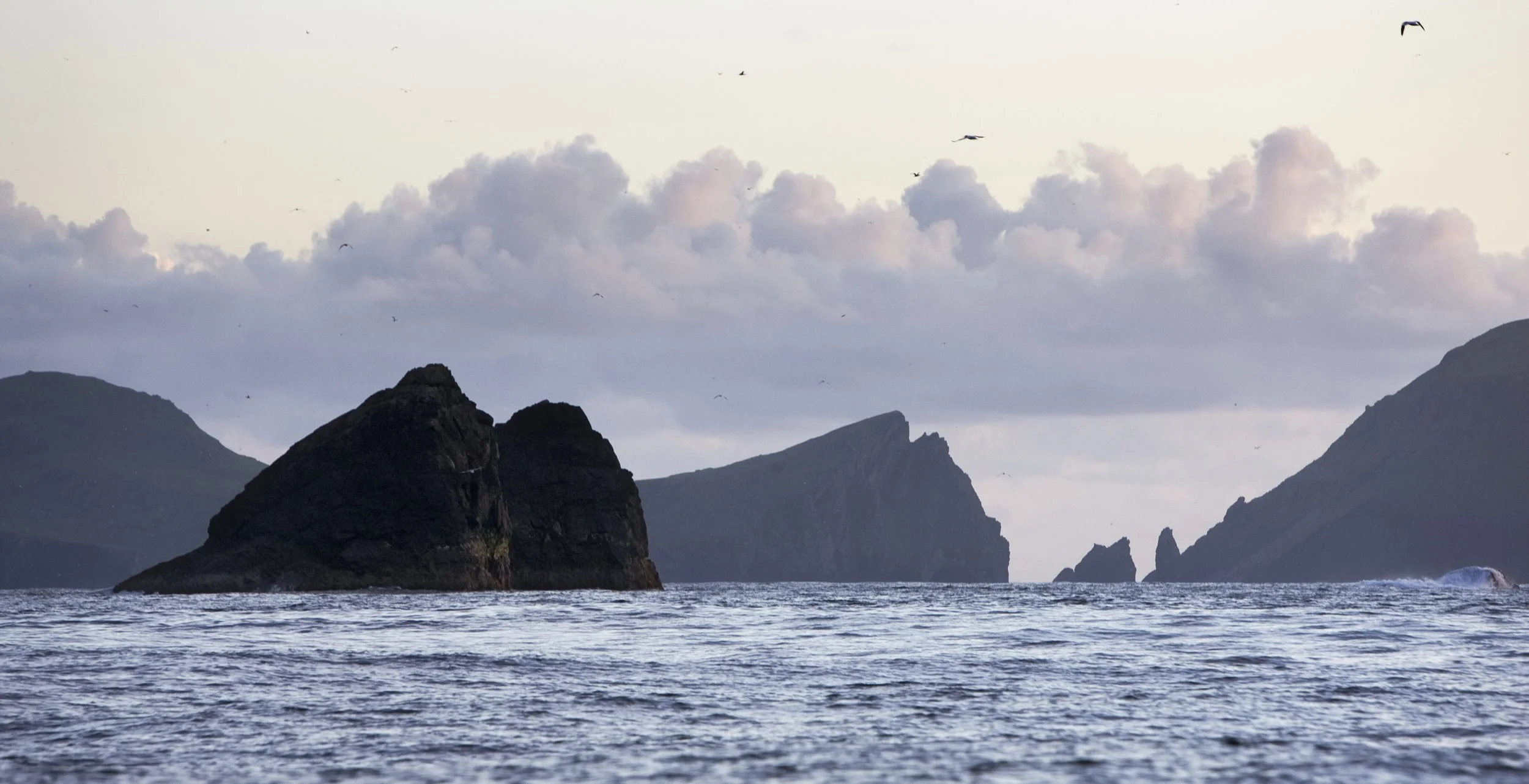
Taking in the wild Atlantic waters, dramatic sea caves and sheer sea stacks, Kate Macleod takes the audience on an awe-inspiring journey to Scotland’s most westerly outpost with an epic journey to St Kilda.

Voices from St Kilda

From 1829 to 1843, Neil MacKenzie was the minister on St Kilda. During his time there, he recorded detailed observations of the island’s life, customs, and natural history. These notes were later compiled by his son, J. B. Mackenzie, into the work Notes made by Rev. Neil MacKenzie, Minister of St Kilda, 1829–43.

February: He describes each month from bleak, ‘dead, lonely and deserted coasts’ – through to the merciful coming of the birds in Spring. '“The shearwater come first in the last days of February and the gannets, ’ the black guillemot having assumed the summer plumage is now seen. The foolish guillemot should now be come. The scarcity of food and fuel which is now felt in their intensity, gives a sombre aspect to everything around us.”

March: “All the birds come now except the puffin. Though the last in coming it is the first generally that is now caught. In good dry weather the gannets can be found very early. The shearwater has been caught, but not in abundance. The puffin will come next week- he will keep his day. All the birds are so regular in the time of leaving and coming, laying, and hatching, that a kind of calendar might be constructed from their migrations.”

April: “All classes of seafowl are during this month about the island. About the end of it the puffin, gannet, shearwater, and black guillemot, begin to lay. No fuel has been yet got; though it should be dry for a few days, there is not sufficient length of dry weather to dry turf. By the boat coming from Harris, and the arrival of the birds, their (the people’s food) is greatly improved. Every family got from forty to fifty gannets, besides small fowl.”

“Thanks be to Almighty God for his kindness to us.”

May: “This is by far the most important season in the year to the fowler. All the birds lay in this month except the stormy petrel, which lays next month.”

June: “The greater part of the fowls have hatched by the end of this month. If deprived of the first laid eggs, that keeps them back two or three weeks, for they take sixteen days to lay a second and a few will not lay again at all. None of the fulmars lay a second egg; but all the rest lay a second and even a third, at equal periods between them, but no more that season. However, the whole of each species do not lay the second egg, still fewer the third. The people are ill off for fuel yet and still worse off for food.”

July: “All the birds are rearing their young, except the stormy petrel, during this month; but that little bird is only beginning to lay about the commencement of it. The people are suffering very much for want of food. During Spring ere the birds came, they literally cleared the shore not only of shell-fish, but even of the species of sea-ware that grows abundantly on the rocks within the sea-mark. For a time then they were better off, particularly as long as fresh eggs could be got. Now the weather is coarse, birds cannot be found, at least in such abundance as their needs require. Sorrel boiled in water is the principal part of the food of some, and even that grass is getting scarce.”

August: “In the beginning of this month the guillemots and razor bills left their rocks, having got their young with them; the puffins about the tenth and also the kittiwakes; and towards the end the fulmar, having been robbed of its young.”

September: “The greater part of the young gannets, with the old ones, leave our rocks about the end of this month. Some of the stormy petrels are also gone with their young. All birds leave our rocks as they get their young ones with them. They come in good condition and leave us very poor. The barley is not half shorn yet, nor the oats. This is decidedly the wettest and windiest season I remember. No fuel is got yet, neither is it likely that any will be this season. How the year is to be gone through I know not. Were it not for the promise that our bread would be given us, and our water made sure, we would feel very uneasy.”

October:The whole of the gannets are away from our rocks, and even the stormy petrel- the last of the sea-fowl. A few gulls, cormorants and black guillemots which turn greyish-white remain about the shore all the year.The fulmar returns for the first time after being robbed of its young, about the end of the month and continues coming to land every day the wind is from the west. A species of small ducks visit the shores, and now and then an eider-duck. When the weather is stormy wild geese, mire ducks and a few straggling swans, may be seen during this and the following months. Our crops are housed. The quantity of straw is large, but the grain very small. Potatoes are very defective, not above half an ordinary crop. No fuel has been got yet. Everything seems to conspire against us this season.

November: “This is the deadest month of the year. The bulk of the fowls having deserted our coast leaves the rocks so black and dead. There is pleasure in seeing anything move in this more than solitary place.”

December: “What has passed of this winter has been rather mild. All kinds of fowls that come thither to breed are gone, long ago, to their winter quarters. Snipe, wrens, crows, ravens and hawks remain all the year round. Blackbirds, thrushes, rooks, lapwings, curlews, herons, ducks etc visit us and some of them remain with us a long while in winter. The people have never been worse off for fuel. Their provisions are not more abundant. Last year was not good; but this one turns out a third less.

Lord have mercy upon us.”

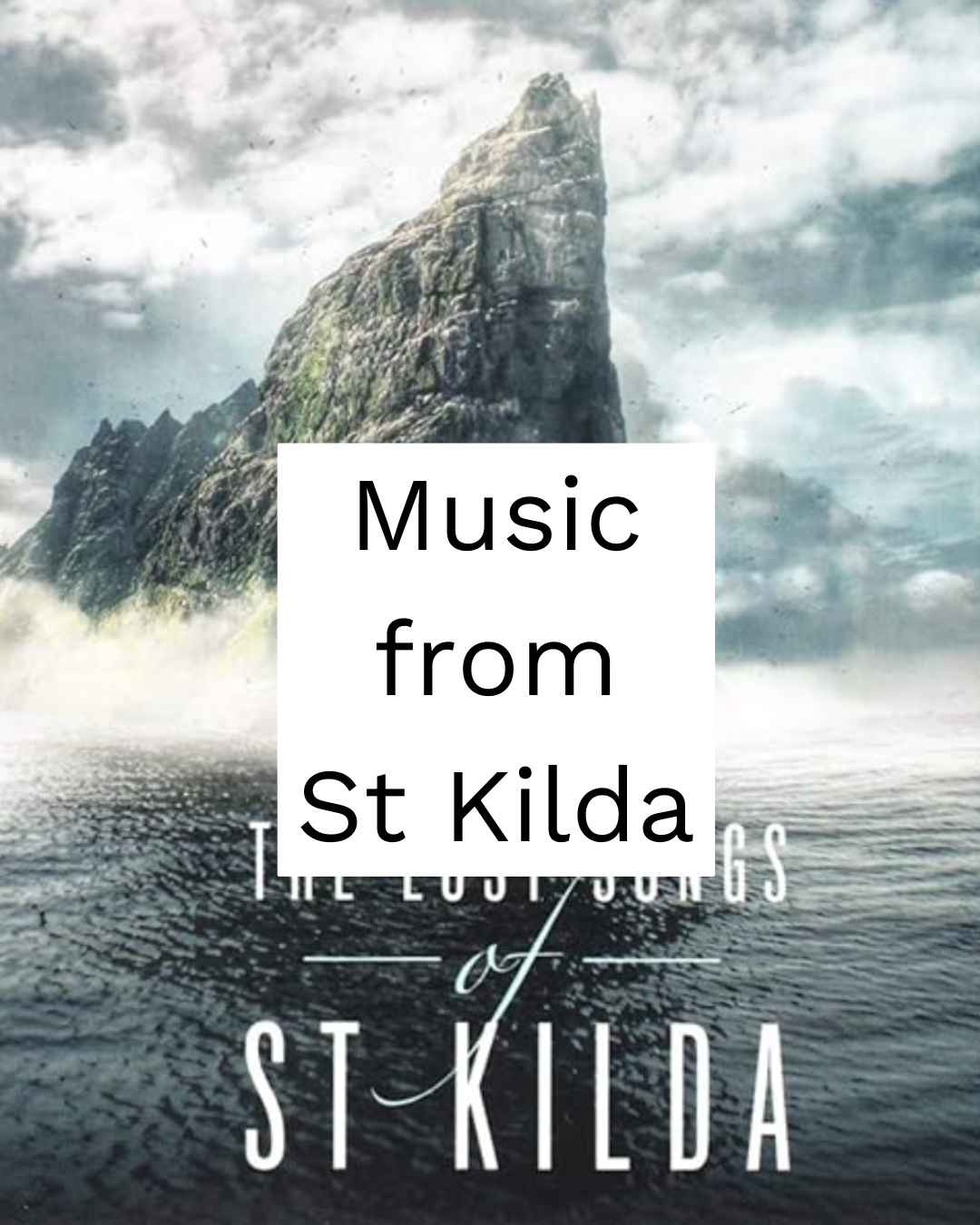
The Lost Songs of St Kilda

The Lost Songs of St Kilda is a collection of eight piano pieces linked to St Kilda, remembered and played by a retired Edinburgh schoolteacher named Trevor Morrison. As a boy, Trevor was taught these melodies by a travelling piano teacher who had connections to St Kilda. The tunes stayed with him throughout his life, even as they faded from wider memory.

Many years later, while living in a care home, Trevor would play the pieces on an old piano. A volunteer, struck by the haunting simplicity of the music, persuaded him to let the melodies be recorded. Using a basic £3 microphone, he captured Trevor’s playing exactly as he remembered it from childhood.

These recordings became The Lost Songs of St Kilda - a rare glimpse into music that might otherwise have disappeared, preserved through memory, chance, and a single care-home piano.